About
Why This Workshop
Modern AI systems can accelerate real research, but using them effectively remains nontrivial. This workshop will develop a community resource of workflows to drive progress at the AI–Math/CS/ML interface — especially in machine learning, optimization, statistics, algorithms, and adjacent areas.
While some researchers focus on how AI may be able to work on research
independently, others are eager to share how AI is able to help humans in their research. However, it is often difficult to extract and reproduce the specific, frequently
complex, workflows and “tricks” used by these researchers. As the degree of usefulness of generative
AI depends greatly on the workflow, many scientists who currently only use AI for basic tasks, can
substantially benefit from access to these methods.
Our workshop aims to help researchers at ICML – especially in machine learning, optimization,
statistics, algorithms, and adjacent areas – to more effectively integrate AI tools in their core
research workflow. The workshop will cover:
AI-Assisted Workflows
Iterative verification loops, failure modes and how to detect them, prompting patterns that improve correctness, decomposition and self-critique, multi-agent strategies, and when to switch from informal to formal reasoning.
Tool-Augmented Reasoning
Integrating LLMs with computation (code, symbolic algebra, numerics), literature navigation, and proof assistants (e.g., Lean) to reduce hallucinations.
Research Acceleration
Using AI for derivations, counterexample search, and experiment design — with an emphasis on methods that transfer across subfields.
Invited Speakers
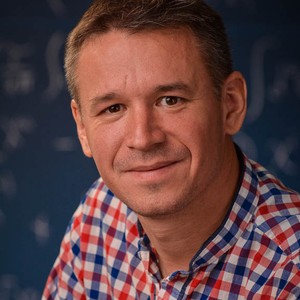
Sergei Gukov is the John D. MacArthur Professor of Theoretical Physics and Mathematics at Caltech, Director of the Merkin Center for Pure and Applied Mathematics, and Consulting Director of the American Institute of Mathematics. His research interests include mathematics and machine learning, quantum topology, gauge theory, and knot and 3-manifold invariants.
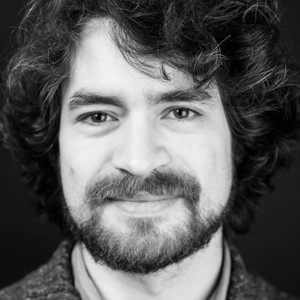
Remy Degenne is a tenured researcher in the Scool team at the Inria centre at the University of Lille. He works on sequential machine learning, especially bandit theory, and is interested in online and reinforcement learning, statistics, and optimization. He is also a maintainer of Mathlib for the Lean theorem prover.
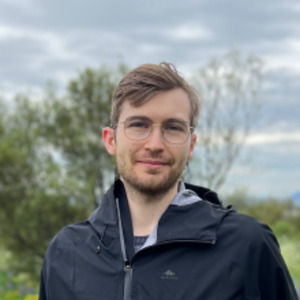
Tim Gehrunger is a postdoctoral researcher in arithmetic geometry at ETH Zurich. His research focuses on stable reduction of hyperelliptic curves and applications to the Parity conjecture. He is part of the organizing team of IMProofBench and has contributed questions to research-level datasets including Humanity's Last Exam.
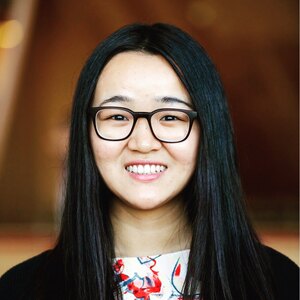
Diyi Yang is an Assistant Professor in the Computer Science Department at Stanford University, affiliated with the Stanford NLP Group, Stanford HCI Group, SAIL, and Stanford HAI. Her research focuses on socially aware NLP, large language models, and human-AI interaction, with an emphasis on human-centered AI systems.
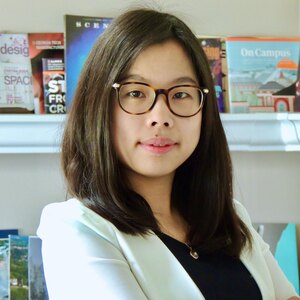
Niao He is an Associate Professor in the Department of Computer Science at ETH Zurich and leads the Optimization & Decision Intelligence Group. Her research lies at the interface of optimization and machine learning, with a focus on algorithmic and theoretical foundations for principled, scalable, and trustworthy decision intelligence.
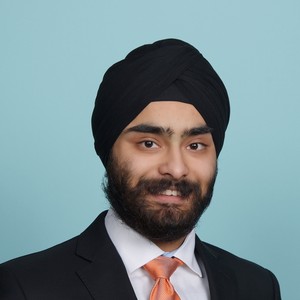
Mehtaab Sawhney is a Clay Research Fellow and a tenure-track assistant professor at Columbia University. His research interests are broadly within combinatorics, probability, analytic number theory, and theoretical computer science.
Debaters
Confirmed Debaters
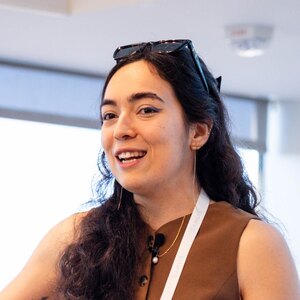
Niloofar Mireshghallah is a Member of Technical Staff at humans&. Beginning Fall 2026, she will join Carnegie Mellon University's Engineering & Public Policy Department and Language Technologies Institute as an Assistant Professor. Her research spans privacy, natural language processing, AI for science, LLM reasoning, and the societal implications of machine learning.
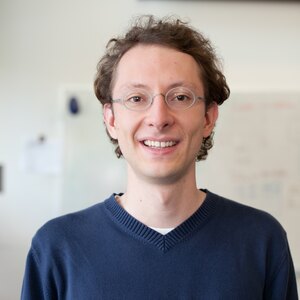
Ludwig Schmidt is an Assistant Professor in Stanford University's Computer Science Department and Stanford Data Science. His research focuses on the foundations of machine learning, often with an emphasis on datasets, multimodality, reliable generalization, and language models. He is also a member of technical staff at Anthropic and LAION.
Schedule
Full-Day Program
All times are local time in Seoul, South Korea (KST (UTC+9))
Abstract
At its core, scientific research is a search, a search for new ideas, new patterns, and new ways to explain or prove things. In this talk, I invite you to explore how AI is reshaping different stages of this process. We will see that while AI excels at many tasks, it still hesitates on others, such as long-horizon reasoning or far-out-of-distribution generalization. I view this as good news: it highlights how much meaningful AI research remains to be done. In fact, the goal of expanding AI’s role in mathematical research has become a motivation for advancing AI itself. I am genuinely excited that these two fields have come into such close contact over the past few years.
Abstract
LLM-powered AI agents are now useful assistants for mathematical research, but they are unreliable and checking their output for errors is difficult and time-consuming. To fix that issue, they can be paired with a formal mathematics system like Lean, to automatically verify their proofs. That is however only possible if the mathematics of interest is expressible in Lean. Large parts of research maths are still out of reach, because their prerequisites have not been formalized yet. Can we use AI auto-formalization to accelerate the formalization of the literature and catch up to recent research? I will discuss the current efforts and challenges for the AI-assisted acceleration of formal mathematics.
Abstract
Can frontier AI systems make autonomous progress on research-level mathematical problems? Can mathematicians use them to accelerate their own research in substantive ways? As model capabilities improve, the answer to both questions is an increasingly confident, though still cautious, “yes.” In this talk, I will survey the mathematical reasoning capabilities of current frontier models, with a particular focus on agentic systems for theorem proving and mathematical exploration. I will discuss what these systems can already do, where they still fail, and what kinds of workflows seem most promising for human-AI collaboration. I will then examine the results from the First Proof, Second Batch competition in detail, with a focus on the design and performance of ProofCouncil, an agentic system for research-level mathematics.
Abstract
Can AI enable students to contribute to research before completing the traditional path to expertise? And can working on research open problems itself become an effective mode of learning? In a semester-long seminar, teams of bachelor’s and master’s students used AI tools to investigate nine open problems in optimization. Drawing on both successful and unresolved cases, this talk explores how AI can support just-in-time learning, accelerate mathematical exploration, and enable earlier participation in research.
Abstract
Recent advances in LLMs have sparked excitement about AI for science, with growing evidence that these systems can generate ideas, run experiments, and accelerate discovery. Yet this framing centers the AI half of the loop, leaving the human half—who collaborates, who benefits, and how—underexamined. In this talk, we argue that realizing AI for science requires studying not just what models can do, but how people work with them. We first examine the ideation-execution gap: although LLM-generated ideas appear more novel than expert ideas at the proposal stage, our large execution study shows this advantage collapses once ideas are implemented, with AI scores dropping significantly. We then ask whether grounding research in real execution can close this gap, presenting a system that builds automated executors and learns from large-scale experimental feedback via evolutionary search and reinforcement learning. Finally, we ask how to measure collaboration itself, presenting CollabSkill, a framework that uses Bayesian skill rating to disentangle human and agent contributions and reveals that collaboration rankings diverge from autonomous benchmarks. We conclude by discussing how realizing the promise of AI for science depends on not only model capability, but also on designing the collaboration between them.
Abstract
We survey recent pace of progress on AI in mathematics; in particular discussing how models have progressed over the past 6-12 months. A portion of the talk will be devoted to how models have played a role in my own mathematical research.
Structured Debate
Motion
The workshop will feature a structured, anti-debate-inspired discussion on the motion:
Even after AI surpasses humans in research ability, humans should continue to fund a significant proportion of today’s human research workforce to conduct research.
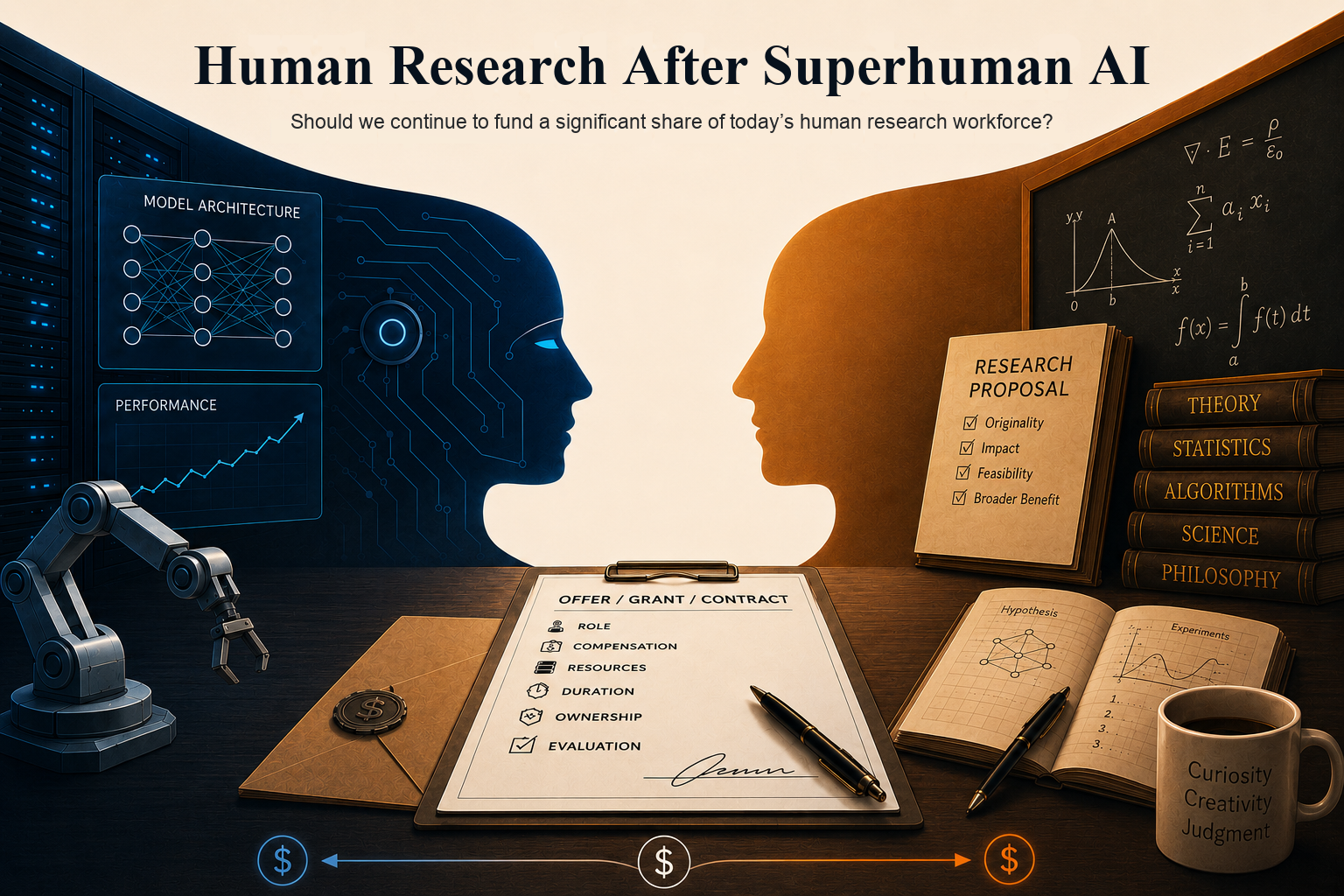
Format: Inspired by the Anti-Debate format, the session starts from opposing positions but aims to build on each side’s insights, clarify real disagreements, and work toward a constructive synthesis.
Call for Papers
Contribute Your Work
Submissions are now closed.
We welcome submissions that highlight workflows using AI for machine learning, math, and computer science research more generally. Your contribution should illustrate—in an accessible way for a non-expert—how a simple workflow has proven to be useful in solving a cognitive research task (e.g., time-saving, energy-saving, result-strengthening, etc.).
The workflow should be reproducible by ML researchers within a few hours and with academic-level financial resources. Therefore, the workflow should either involve simple prompting-based strategies, or more sophisticated strategies where the submitters provide a package/agent/repository that can be readily integrated into a chat interface or an API call. All accepted submissions will be made publicly accessible, creating a shared repository of AI-assisted research workflows.
We also welcome submissions that illustrate interesting failure modes, to improve the community's understanding of the limitations of AI assistance.
We focus on the following tasks where AI can help, and challenges associated with AI-assisted research:
- AI-assisted research problem formulation
- AI-assisted experiment design for ML research
- Solving mathematical research problems with AI assistance
- Formalization and verification workflows for research, e.g., formalizing proofs in Lean or other proof assistants, especially as it is relevant for machine learning
- Automation of iterative loops
- Other tasks that are integral to an AI-assisted research workflow
The focus is on how researchers can become more productive, more rigorous, and do better research with the help of AI, and less on autonomous AI research, which is the focus of another exciting workshop: AI4Math.
In order to maintain focus, our workshop will not consider tasks that are not research-centered, such as simple writing, basic literature search (aka “deep research”), slide and poster creation, and pure software engineering (e.g., installing packages, version compatibility, etc.). There are already many resources available for such tasks.
What to include in your submission:
- Explain the cognitive task that appeared in your research, for which AI has either significantly saved your time, or improved the results that you could obtain otherwise. Estimate the time-savings or performance improvements.
- Describe the AI workflow you used in a way that is reproducible and usable by other researchers in a few hours.
- This may include specific prompting techniques, code to call the API (once or repeatedly), a detailed description of how you set up the agentic frameworks, etc.
- If your workflow relies on web-based prompting, share the exact prompt and ideally the exact transcripts of your conversation.
- If your workflow relies on an API-based interaction and/or agentic research, provide a link to a repository with your code.
- If applicable, discuss failure modes and what you learned from them.
- Ensure that submissions are as close as possible to the working workflow itself. We aim to convert as many submissions as possible into workflows to test their performance. Make sure that the workflow is reproducible, including a README explaining how to install packages, and include any code that is not publicly available.
- Explain how you verified the correctness of the results.
The contributions will be evaluated according to accessibility, reproducibility and correctness.
Reciprocal reviewer. Each submission nominates one author as a reciprocal reviewer. We anticipate around 3 papers per reviewer, with the review window running between the submission and notification dates below. A track record of peer-reviewed publications at major ML/AI venues (ICML, NeurIPS, ICLR, ACL, etc.) or comparable journals is preferred, and responsible reviewing is an important consideration.
Submission Format
- Main paper: up to 4 pages, excluding references; supplementary or appendix material may be included after the references in the same submitted PDF (e.g., detailed walkthroughs, screenshots, and conversation transcripts).
- Must follow ICML 2026 format
- Indicate preferred presentation: computer demo or poster
- Submission portal closed
Policies
- Non-archival: papers published at other venues are welcome
- Double-blind review: submissions must be anonymized
- Accepted papers will be presented as demos or posters; select papers may be invited for contributed talks
- Review criteria: accessibility, reproducibility and correctness
Important Dates
- Submission deadline: May 13, 2026
- Notification of acceptance: May 31, 2026
- Workshop date: July 10th, 2026
All deadlines are Anywhere on Earth (AoE)
Venue & Attendance
Logistics
Location
AUDITORIUM
COEX Convention & Exhibition Center
Seoul, South Korea
Part of ICML 2026 (July 6–11, 2026)
Workshop Dates
July 10th, 2026
(ICML 2026 workshop days)
Full-day, in-person
Registration
Workshop attendance requires ICML 2026 registration.
A workshop-only registration is sufficient. Please register through the main conference website.
Organizers
Workshop Committee
HDSI Endowed Chair Professor in Artificial Intelligence at UC San Diego. His research spans artificial intelligence, machine learning, and high-dimensional statistics.
Member of Technical Staff at OpenAI. His work includes large language models, convex optimization, online algorithms, and adversarial robustness.
Associate Professor of Statistics and Computer & Information Science at Penn. His research sits at the interface of statistics, machine learning, and AI.
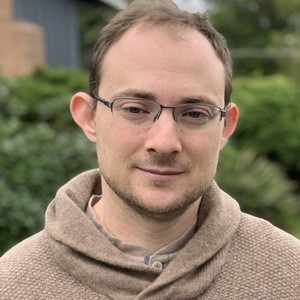
Professor at the Halicioglu Data Science Institute at UC San Diego. His research interests are in optimization, high-dimensional statistics, machine learning, and AI.
Robert Grimmett Professor of Mathematics at Stanford University and President of the American Mathematical Society. He works in algebraic geometry.
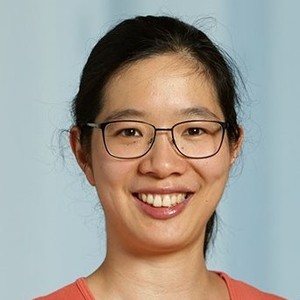
Assistant Professor of Computer Science at ETH Zurich. She works on high-dimensional and robust machine learning.
Coordinator
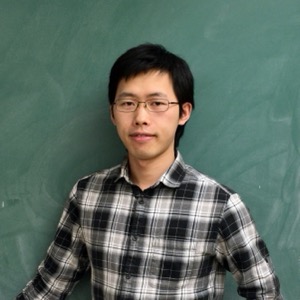
Qingsong Wang is a postdoctoral researcher at UC San Diego, working with Prof. Mikhail Belkin and Prof. Yusu Wang. His research interests include diffusion and flow-matching generative models, data geometry, and representation learning.
Volunteers
Get Involved
Call for volunteers: our workshop aims to serve the needs of the community, and be community-driven. If you are interested in volunteering, please contact us. Sign up to help review contributions, build a platform to share workflows and make them easily accessible and searchable, or support the workshop in other ways.
Interested in volunteering? Sign up here.
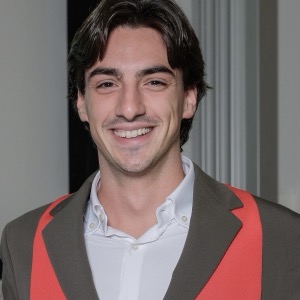
Federico Di Gennaro is a PhD student at ETH Zürich, advised by Prof. Fanny Yang. His research interests include statistical learning and trustworthy ML.
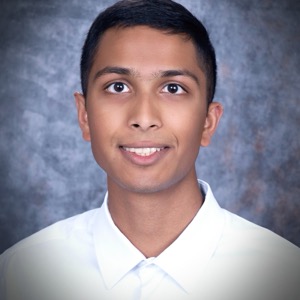
Sunay Joshi is a PhD student at the University of Pennsylvania, advised by Prof. Edgar Dobriban and Prof. Hamed Hassani. His research interests include conformal prediction and uncertainty quantification for AI.
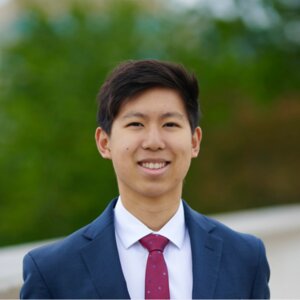
Erik Wang is a PhD student at Stanford University, working with Prof. Tengyu Ma. His research interests include language model reasoning, self-improvement, and scientific discovery.

Tao Wang is a PhD student in Statistics and Data Science at the University of Pennsylvania, advised by Prof. Edgar Dobriban. His research interests include uncertainty quantification, optimal transport, and LLM post-training.